Living longer is no longer just a demographic or healthcare issue: it is becoming one of the major economic opportunities of the coming decades. The second Global Healthspan Report by Hevolution Foundation shows that science and industry focused on extending the number of years lived in good health are entering a new phase of growth, driven by a sharp increase in investment, the emergence of new business models, and growing demand for prevention, diagnostics, and personalized medicine solutions.
The study estimates that investment in areas directly related to healthspan reached $7.3 billion in 2024, more than double the $3.48 billion recorded in 2023. This represents a significant rebound following the decline in 2023 and the second-highest investment volume in the historical series analyzed, surpassed only by the $8.8 billion recorded in 2021.
Longevity and healthy aging are moving beyond a scientific niche to become a new economic ecosystem, bringing together biotechnology, pharmacology, diagnostics, artificial intelligence, preventive medicine, digital health, wearable devices, specialized clinics, nutrition, and services aimed at a population that will live longer.
The report estimates that just one additional year of healthy life expectancy in the United States could generate up to $40 trillion in economic value. For low- and middle-income countries, the estimates cited by Hevolution point to a potential economic benefit of $220 billion annually by 2050, with returns of up to $16 for every dollar invested in certain interventions targeting noncommunicable diseases.
China provides another example of the potential of the so-called silver economy: the report includes estimates suggesting that this market could triple to reach $4.2 trillion by 2035, equivalent to approximately 10% of the country’s GDP.
Demographic transformation is also making longevity and healthy aging an economic issue: the global population aged over 60 is projected to reach 2.1 billion people by 2050, according to the references cited in the report. The question is no longer simply how many years we live, but how many of those years we can remain healthy, active, and independent.
In this context, demand is also changing. In fact, two-thirds of healthcare professionals surveyed by Hevolution report receiving patient inquiries about healthspan-related interventions at least once a month, while one-third receive such inquiries weekly.
At the same time, 49% of consumers surveyed say they would be willing to pay the equivalent of up to half a year’s income for a therapy capable of extending their healthy life expectancy by ten years.
This demand is driving growth in adjacent markets. The report highlights, for example, the global wearables market, which could reach $231 billion by 2032, with a compound annual growth rate of 14.6%, as these devices evolve from simple physical activity tracking to monitoring multiple health parameters.
Specialized medical services are also expanding. The report identifies the growth of healthspan and longevity clinics as one of the key developments in the transition from scientific research to clinical practice.
An Industry to Be Explored in Depth at LWF
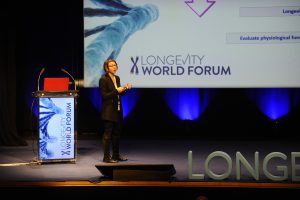
All these developments — from investment, research, social impact, and startups to longevity clinics, AI, and new business models — will be part of the discussions at the upcoming Longevity World Forum (LWF), whose fifth edition will take place in Madrid from February 10 to 12, 2027.
LWF brings together the three areas driving this transformation: science and research, technological development, and entrepreneurship, connecting researchers, companies, technologists, startups, investors, healthcare professionals, and institutions.
The upcoming edition will therefore provide an opportunity to see firsthand how research into longevity and healthy aging is beginning to translate into products, services, companies, and investment opportunities: from new biomarkers and diagnostics to therapies, AI applications in healthcare, preventive medicine, specialized clinics, and solutions aimed at an increasingly long-lived population.
Longevity and healthy aging are no longer just about how many years we will be able to live. The economic question is what companies, technologies, and business models will emerge to ensure that those additional years are also years of health, independence, and activity; in other words, moving towards a society in which we not only live longer, but also live better.
More information: www.longevityworldforum.com