Why do some people live beyond the age of 100 and, moreover, reach that milestone with a level of health and independence that is far from typical? A question that for centuries belonged to the realm of curiosity and extraordinary stories has now become a subject of scientific investigation.
Research into longevity and healthy ageing no longer seeks merely to explain how long we can live, but also to understand why some people age more slowly or delay the onset of age-related diseases for decades.
Centenarians have become a kind of “natural experiment” in human longevity. By studying their genes, cells, metabolism, immune systems, lifestyles and environments, researchers, technologists and scientists can piece together a map of the mechanisms that may promote healthy ageing: the “scientific map of the centenarian.”
The aim is not to discover a formula for eternal life, but to identify the biological and environmental factors that can extend the number of years a person lives in good health, with independence and functional ability.
One of the first areas explored by researchers is genetics. The work carried out by researcher and scientist Consuelo Borrás, together with the team led by José Viña at the University of Valencia and INCLIVA, is one example of this scientific pursuit. One study compared the production of certain microRNAs — molecules involved in regulating gene expression — in 20 centenarians, 20 octogenarians and 20 young individuals.
The results showed that the production of these microRNAs in centenarians was more similar to that observed in younger individuals than in octogenarians. The findings therefore suggested that certain mechanisms regulating gene expression may be better preserved during ageing in people who achieve exceptional longevity.
Borrás herself points out that centenarians not only live longer, but also “remain disease-free for more years.” The researcher has also suggested that heredity may play a significant role. Studies involving the descendants of centenarians aim to determine whether certain biological profiles associated with longevity can be identified before these individuals reach advanced ages.
Another characteristic that makes centenarians a valuable scientific model is that, in many cases, they not only live longer but also delay the onset of age-related diseases.
This distinction is essential because living longer does not necessarily mean enjoying more years in good health. The challenge of longevity, therefore, is not simply to postpone death. It is to delay the onset of frailty, disability and/or disease until later stages of life.
Mitochondria — the cellular structures responsible for producing much of the energy our bodies need — are another major focus of ageing research. Mitochondrial function, oxidative stress and the ability of cells to maintain their energy balance are closely linked to the ageing process.
This field encompasses part of the scientific career of Consuelo Borrás, a researcher at the University of Valencia specialising in the physiology of ageing and processes related to mitochondria and oxidative stress. Borrás also highlights biological differences between men and women that may help explain some of the differences in longevity. Among these, she points to the role of oestrogens in mitochondrial function and how this protective effect changes after menopause.
The Scientific Map of the Centenarian Is Not About Achieving Immortality
The ability to maintain strength, balance, mobility and independence has become a central focus of research into longevity and healthy ageing. In this regard, scientific research and clinical practice agree on the importance of preserving physical function throughout life.
Consuelo Borrás, who holds a PhD in Physiology, emphasises “the importance of combining strength and endurance training with coordination, balance and flexibility exercises, particularly to prevent falls and maintain independence.”The goal is not to achieve a particular biological age on a test, but to preserve the ability to walk, stand up, maintain balance, carry out everyday activities and continue participating actively in social life.
Research into centenarians is also prompting scientists to look beyond genetics. Nutrition, physical activity, sleep, stress and social relationships consistently emerge in studies on healthy ageing, although their relative importance and the specific mechanisms involved remain subjects of ongoing research.
Borrás stresses that the goal should not be to become obsessed with reaching the age of 100, but rather to gradually adopt healthy habits until they become part of everyday life.
Science is not uncovering a universal formula for becoming a centenarian. Instead, it is identifying factors that may increase the likelihood of ageing in better health.
In this context, the field known as Geroscience studies the biological mechanisms of ageing with the aim of delaying, preventing or reducing age-related diseases. The United Nations has highlighted that this discipline could have not only healthcare implications, but also economic and social consequences in the context of population ageing.
From the Laboratory to Longevity World Forum 2027
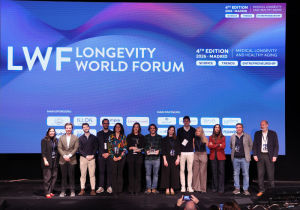
All these areas of research will be explored at the fifth edition of the Longevity World Forum (LWF), which will take place at La Nave in Madrid from 10 to 12 February 2027.
The event brings together researchers, physicians, biotechnology companies, technology experts, startups, scientists and investors to examine how knowledge about longevity and healthy ageing can be translated into strategies capable of extending healthspan — the number of years lived in good health.